
HST4 and HST2 v3 - All-New Stud Expander
An article covering the HST 4 and HST 2 v3 stud anchors
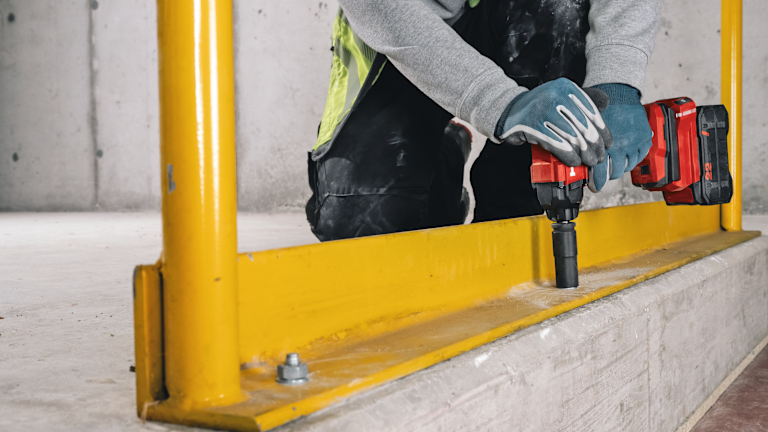
Two new stud expanders – the core of our mechanical fastening portfolio
Pinbolt expander, friction anchor or simply expander – dear child has many names. We are now launching two completely new and innovative stud expanders which, together with our HUS4 concrete screw, will form the core of our standard portfolio for mechanical fasteners.
HST4 – our strongest pin bolt expander ever

Figure 1 HST4
With an updated design where both the segment and the cone – the lower part of the attachment – have been refined, the HST4 offers significantly higher capacity than its predecessor HST3. The segment, which expands over the cone, has been lengthened and given new details that provide better grip in the concrete. In addition, this is our first stud expander with built-in grooves in the cone, which provides a safer installation and further capacity improvements.
HST4 is available in both electro-galvanized and stainless steel versions.
HST2 – versatile and robust

Figure 2 HST 2 v3
HST2 v3 has a slightly simpler design than HST4 – but don't be fooled. It has a high capacity and is approved for use in cracked concrete. It is available in electro-galvanized, stainless steel and also hot-dip galvanized versions, which makes it particularly suitable for low-corrosive outdoor environments. Typical applications include anchoring railings, stairs, posts and retrofitted beams and columns.
When should you choose HST4?
HST4 is an excellent choice for many applications. Thanks to its high capacity, you can often compare, for example, an HST4 M10 with an HST2 M12 or a HUS4 12 mm from a capacity point of view.
In the example below, an HST4 M10x80 is compared with a HUS4 12x100. The results show that the HST4, despite the smaller dimension and shorter settling depth, has a higher capacity than the HUS4. The example shows the design towing capacity without the effect of, for example, proximity to the edge or distance to nearby fastening.

Figure 3 HST V HUS
Faster assembly and less vibration
With the Swedish Work Environment Authority's new regulatory structure, which came into force on 1 January 2025, according to AFS 2023:3 chapter 6, there is a greater responsibility on all designers to choose solutions, methods and products that ensure the best possible work environment during the construction phase. Vibrations and dust are two risks that have come to the fore in recent years in the construction industry. Our view is that knowledge about how the choice of attachment and mounting method affects the fitter and the work environment is relatively low. For example, there are currently drilling methods that effectively handle dust at the source – but are not used to the extent that they should. Even differences in vibration exposure between different mounting types are often overlooked.
Concrete screws have long been the most commonly prescribed fastener, thanks to their high capacity and quick assembly. But the truth is that concrete screws expose the installer to relatively high vibrations when driving – more than a stud expander. With the help of smart accessories, such as torque-controlled impact wrenches and drive devices, you not only reduce vibration exposure. For larger dimensions, HST4 is also significantly faster to install than HUS4.
In this video, Johannes Öberg shows an efficient and work-friendly assembly of stud expanders.
Expander - Fast and safe assembly - Engineering Center