

The importance of having a full regulation and code complaint framework in place
For times when cast-in rebars aren’t planned and placed to connect concrete members, there aren’t many alternatives other than using injection mortar or grout. At first sight, they might look like similar technologies – still talking about chemical products surrounding a rebar, installed in a drilled hole, isn’t it? However, these two technologies are far from being similar for several reasons.
We touched on this in a previous article comparing the most popular rebar technologies. You may benchmark and compare the two technologies from different points of view, such as code suitability, productivity and reliability. Spoiler alert: Injection mortar outperforms grouts in every aspect.
Let’s deep dive into the comparison based on the regulatory framework for now.
Before we start, it would make sense to clarify a few points. Talking about grouts, we are referring to pre-dosed bi-components products that need to be mixed (manually or using a machine) by an operator. The two components are usually contained in cans and after mixing, the grout is poured into the hole using the "dip-and-stick" technique.
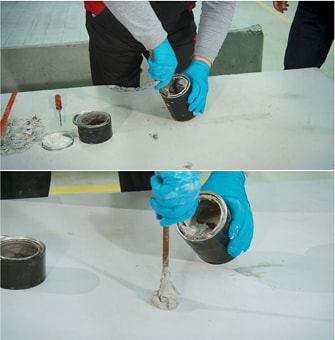
An example of manual mixing and a dip-and-stick installation of a bi-component grout system
Talking about mortar injection systems, we refer again to bi-component products in pre-dosed cartridges (such as HIT-RE 500 V3 and HIT-HY 200-R). The mixing is carried out by a dispenser (by discarding a required number of pumps as per the product manual) The dispenser is also used for injecting the adhesive blend into the bore hole.
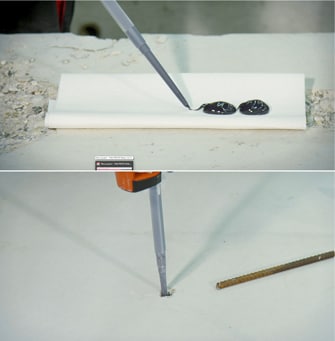
An example of dispenser-mixing and injection of a chemical mortar
The importance of a technically sound qualification process in place for injection mortars: ETA Approvals
When dealing with the design of critical and safety-relevant applications, there are two important tasks to be accomplished: first of all you need to define the acting loads. Secondly, you need to run a proper design to check if the capability is higher than, or at least equal to, the demand.
To be safe and compliant with the international standards used for the design of the rest of the structure, post-installed rebar applications should be carried out by a technology fully covered under these standards. Injection mortar technology from reputed brands and with third-party approvals are suitable for designing your concrete-to-concrete connections according to Eurocode. Also, we need to ensure that the application conditions such as seismic and fire are covered, if necessary.
On the other hand, when it comes fixing a new concrete member to an existing one with grouts, we can’t achieve a consistent code compliance as is the case with injection mortars.
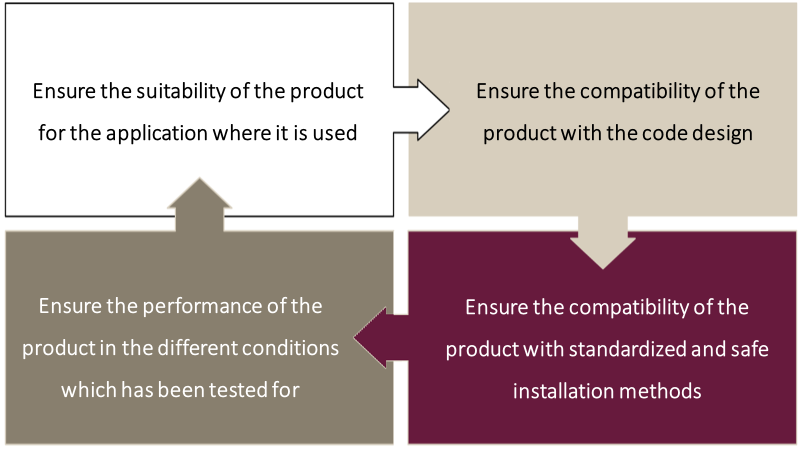
The importance of having a full qualification
such as ETA or ICC-ES in place
for post-installed rebar solutions
To start with your fully-compliant concrete-to-concrete connection design, use a software like our PROFIS Rebar for quick and reliable support: you can calculate rebar anchorages and splicing with hilti injection systems according to the most-updated state-of-the-art design codes and hilti methods.
In case you need more support to understand which qualification is most suited to your application requirement, please leave a comment on this article or post your question in our Q&A section.
